Signed in as:
filler@godaddy.com
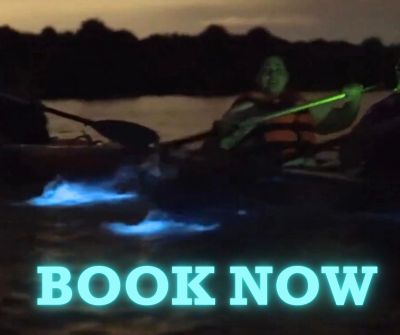
Bioluminescence in Cocoa Beach, Florida turns an ordinary paddle into something you won't stop talking about. Dip your paddle into the dark water and the lagoon erupts beneath you in flashes of electric blue. Every stroke sends a cascade of glowing light rippling outward, and below the clear hull of your kayak, fish dart through the water like living sparks. This isn't a screen saver or a theme park effect. It's a real, living phenomenon happening right now in the waterways surrounding Cocoa Beach, and visitors return to Florida's Space Coast summer after summer just to see it again.
The experience is far more accessible than most people expect. You don't need to be an experienced paddler, and the destination is closer than you might think. The glowing lagoons of the Space Coast sit roughly an hour from Orlando, about 50 to 60 miles depending on your route, which makes this a realistic day trip rather than a major expedition. With the right timing, the right launch spot, and ideally the right guide, you can witness one of nature's most surreal light shows from a kayak. The team at Florida Bioluminescence Tours has been leading guests through these waters for years, and this guide covers everything they've learned: when to go, where to launch, what to book, and how to show up ready.
The glow comes from dinoflagellates, microscopic single-celled plankton that release a blue-green chemical flash whenever the water around them is disturbed. This isn't a passive, ambient shimmer. It's an active defense mechanism triggered by movement, which is why paddling through the water or watching a fish dart beneath your kayak creates a dramatic, fireworks-style effect rather than a steady glow. The reaction is instantaneous and repeatable throughout the night.
One thing worth knowing upfront: the glowing plankton are technically classified as toxic during heavy blooms, which is why swimming in the lagoons is discouraged at those times. Kayaking puts you in the perfect position to experience the display without any contact with the water. That's one reason guided kayak tours exist specifically for this phenomenon rather than snorkel trips or boat rides. For additional background on why the phenomenon occurs in Florida, see an explanation of why bioluminescence happens in Florida.
The Indian River Lagoon, Banana River, and Mosquito Lagoon form a connected brackish-water system well-suited to dinoflagellate blooms. The water is shallow, warm, and nutrient-rich, creating near-ideal conditions for population explosions of bioluminescent algae Florida-wide, and especially here, during summer months. Among documented bioluminescence destinations in the eastern United States, this stretch of Florida coastline stands out for the consistency and intensity of its displays, which is why the Space Coast has earned a strong reputation among eco-tourists as a premier destination for glowing water experiences. For a broader list of hotspots around the state, see this roundup of the Top 5 places to see bioluminescence in Florida.
If you're visiting in November, don't write off the lagoon entirely. The show shifts from dinoflagellates to comb jellies, a completely different organism that flashes blue when disturbed. The effect is different, more like floating lanterns than fireworks, but still worth the paddle for off-season visitors who happen to be in the area.
July and August deliver the most intense and consistent displays, with June, September, and October still producing strong results on most nights. The connection is straightforward: warmer water temperatures accelerate dinoflagellate concentrations, and the lagoon system peaks during the height of summer heat. As fall arrives and water temperatures drop, the blooms taper and the glow becomes less predictable. If you have flexibility in your travel dates, any night in July or August is a strong bet.
Choosing the right month gets you in the ballpark, but choosing the right moon phase is what separates a jaw-dropping experience from a disappointing one. Moonlight creates glare on the water surface that washes out the faint glow of the plankton. You need darkness, and that means planning around the new moon. The ideal window is roughly five days before and five days after each new moon date, when the sky is at its darkest. For planning, consult a bioluminescence moon calendar to identify the optimal windows in any given month.
For 2026, the most reliable windows fall as follows. The new moon hits on July 14, making July 3 through July 18 the year's prime window. August 12 is the next new moon, giving you August 3 through August 16 as a strong secondary window. September follows with a new moon on September 11, opening up September 2 through September 15. Operators like Florida Bioluminescence Tours build their entire tour calendar around these dates, which is one of the clearest advantages of booking a guided experience over showing up on your own. For a seasonal forecast and condition notes, check What to Expect from Bioluminescence This Season in Florida!
Heading out after 9 PM gives the water maximum darkness, even during shorter summer nights. Clear nights following a warm, sunny day tend to produce the brightest displays, as daytime heat accelerates plankton activity and the lagoon carries that energy into the evening. Rain can dilute the effect, so keep an eye on the forecast in the days leading up to your trip.
Kiwanis Island Park is the most accessible and popular public launch point near Cocoa Beach, offering easy parking, free access, and straightforward entry onto the Indian River Lagoon. It's the go-to spot for first-timers and families because it's well-maintained and simple to navigate in the dark. Most guided tours out of Cocoa Beach launch from here, which means the area around the park can feel lively on peak summer nights.
Kelly Park East sits right on the Banana River and offers a quieter, more intimate alternative for paddlers who prefer fewer crowds. The park has a boat dock and shoreline access, and its position on the Banana River puts you directly in one of the most productive bioluminescent zones in the region. If you're planning a self-guided paddle and want more solitude, Kelly Park East is worth the slightly longer drive.
For the most light-pollution-free experience on the Space Coast, the Merritt Island National Wildlife Refuge is in a category of its own. The Haulover Canal kayak launch and the Beacon 42 boat ramp give non-motorized paddlers access to Mosquito Lagoon with no fee for kayak entry. Beacon 42 allows 24-hour access, making it a practical option for late-night bioluminescence trips. The tradeoff is real: getting there takes more planning, and navigating a wildlife refuge at night requires more awareness than a well-trafficked park. For practical launch details and ramp locations, see local launch listings and guides.
Florida Bioluminescence Tours also runs Cocoa Beach night kayak tours from the Titusville and Wildlife Refuge location, combining a sunset paddle with manatee and dolphin viewing before the bioluminescence kicks in after dark. For guests who want the full Space Coast nature experience, the 3-hour sunset-to-glow combo at this location is the most comprehensive option available.
The biggest variable in a self-guided bioluminescence trip is sighting reliability. The glow is not guaranteed on any given night, and experienced guides know which specific spots are producing on any given evening, how to read water conditions, and how to position kayaks for maximum effect. Across platforms like TripAdvisor, reviews of Space Coast bioluminescence tours consistently highlight guide knowledge as a major factor in whether a trip feels magical or underwhelming. A good guide turns a paddle through dark water into a biology lesson, a wildlife encounter, and a light show all at once.
Booking a guided trip also removes the equipment burden from your shoulders. You're not just paying for a kayak rental; you're paying for the expertise of someone who knows how to read conditions and the right gear to make the most of them, including cancellation policies that protect you if weather turns against you.
Florida Bioluminescence Tours runs clear kayak bioluminescence tours in Cocoa Beach, and the difference in experience is significant. A standard kayak forces you to lean over the side to watch the water. A transparent hull puts the glowing lagoon directly beneath your feet, turning the entire floor of the boat into a window on the light show happening below. Guests consistently describe the effect as immersive in a way that side-viewing simply can't replicate.
Florida Bioluminescence Tours offers three main formats for Cocoa Beach guests. The 1.5-hour clear kayak tour runs at $79 per person and is the signature experience. The family-friendly raft option at $67 is a great fit for groups with younger children or anyone who wants a more relaxed, stable craft. The 3-hour sunset-to-glow combo in clear kayaks at $98 is the premium option, taking you through the golden hour before darkness and the full bioluminescence display.
All formats are described as not strenuous, and children five and older are welcome on most tours. Summer tours sell out weeks in advance during the July and August new moon windows. Advance booking is strongly recommended. During those peak windows, spots disappear well before the date arrives, so locking in early is the only reliable way to secure your preferred night. For a full primer on what operators recommend guests expect, read What to Expect from Bioluminescence This Season in Florida!
The packing list for a bioluminescence tour is mercifully short. Bring water, insect repellent, closed-toe shoes or water sandals, and dark-colored clothing. Guides typically recommend darker fabrics because light-colored clothing reflects ambient light back onto the water surface, which can diminish the visual effect around your kayak. A fully charged phone in a waterproof case covers both communication and photography needs. Families should know that children as young as five can participate in most guided tours, and the pace is relaxed enough that non-athletic participants do just fine. For a quick checklist and preparation tips, consult this guide on How To, Bioluminescence Tours of Florida, Night Kayaking Tours.
Smartphone night mode handles bioluminescence photography better than most people expect, but stability is the critical factor. Bracing your phone against the kayak's hull or using a small flexible tripod dramatically reduces blur during long exposures. Setting ISO high (around 3200 to 6400) and using the longest exposure your camera allows will capture more of the glow, though very high ISO values introduce noise, apps with manual controls let you fine-tune the balance. Beyond settings, one rule applies to everyone in the group: keep flashlights and phone screens off while you're actively viewing. Any white light washes out the visual effect for everyone nearby.
That said, carrying a white light is not optional, it's legally required. Florida law mandates a white light visible to other vessels, a Coast Guard-approved life jacket per person, and a sound-producing device such as a whistle. For kayakers operating in coastal waters between sunset and sunrise, U.S. Coast Guard regulations also require visual distress signals (VDS), such as three pyrotechnic flares or an approved non-pyrotechnic alternative. Keep the white light and VDS stowed and ready for safety use; turn them off only when conditions allow and the viewing experience is your priority. Guided tours provide life jackets and handle navigation, but solo paddlers should also carry a backup light, file a float plan with someone on shore, stay with their group, and keep hands out of the water near active plankton blooms.
Bioluminescence in Cocoa Beach, Florida is one of the few natural phenomena in the state that consistently delivers on the promise. Paddling over glowing water beneath a dark summer sky is not something any photo or video captures accurately, which is exactly why the people who experience it once almost always want to go again. It's real, it's accessible, and it's closer than most travelers realize.
For 2026, the July new moon window centered on July 14 is the year's best opportunity, followed closely by August. Florida Bioluminescence Tours schedules every departure around these peak windows and offers clear-hull kayaks that put the glow directly beneath you, a setup you won't find at most other operators. Whether you choose the classic clear kayak tour, the family raft, or the full sunset-to-glow combo, the approach is the same: pick your window, book early, and show up ready to be surprised by what's living in the water beneath you. To dive deeper into options and routes, see the Ultimate Bioluminescence Guide: Top Kayaking Tour in Florida.
Tours during peak new moon windows in July and August fill up weeks out. Book your spot at Florida Bioluminescence Tours now before your preferred date disappears from the calendar. For an additional perspective on timing and seasonal peaks, this write-up on the best time to see Florida bioluminescence is a useful companion when planning your trip.